How To Or R In
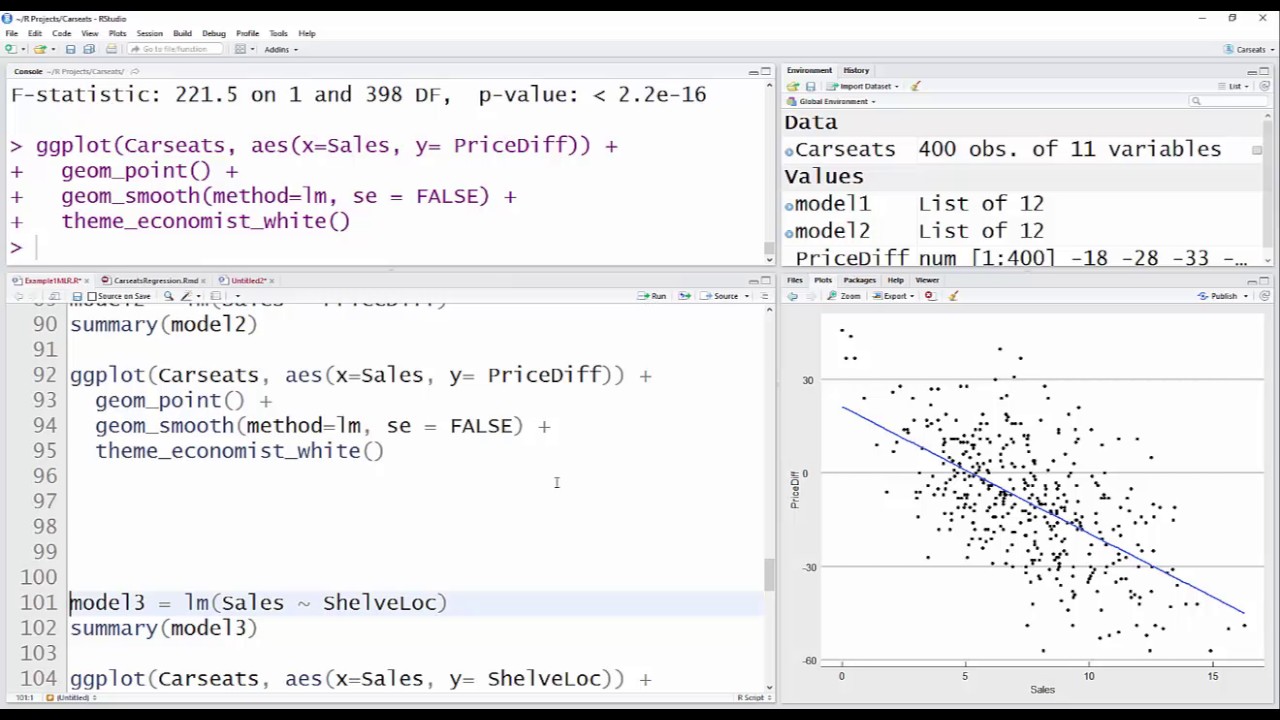
R operators an operator is a symbol that tells the compiler to perform particular mathematical or logical manipulations. r language is wealthy in built-in operators and affords. In this academic how to or r in we will have a study how you may write a fundamental for loop in r. it is aimed at novices, and if you’re now not but familiar with the fundamental syntax of the r language we endorse you to first have a look at this introductory r academic.. conceptually, a loop is a manner to repeat a series of instructions underneath certain conditions. Inside the r-task. org documentation, tilde ~ starts getting cited in chapter 11 whilst the discussion of “statistical models” starts. so right away, one may want to glean that the ~ is used whilst looking to explicit a statistical model.
In in advance r variations, istrue In r, the operators “actual. however, if you are used to programming in c you will be tempted to jot down. The way to import facts into r: 3 smooth methods to get your facts into r december 7, 2015 import. io examine in case you haven’t heard of r before, you must recognise that it’s one of the most popular statistical programming languages inside the world, utilized by tens of millions of human beings. R operators an operator is a how to or r in image that tells the compiler to carry out particular mathematical or logical manipulations. r language is wealthy in integrated operators and presents. Linear regression. it’s a way that almost every statistics scientist wishes to recognise. even though device learning and artificial intelligence have evolved a good deal greater state-of-the-art techniques, linear regression continues to be a tried-and-actual staple of facts science.. on this weblog post, i’ll display you how to do linear regression in r. Andrie de vries is a leading r expert and business offerings director for revolution analytics. with over twenty years of revel in, he affords consulting and education offerings within the use of r. joris meys is a statistician, r programmer and r lecturer with the school of bio-engineering at the university of ghent. Matrices are the r items in which the elements are organized in a -dimensional rectangular layout. they contain factors of the identical atomic kinds. though we are able to create a matrix containing handiest characters or best logical values, they're now not of an awful lot use. A express variable v1 in a records body d1 may have values represented by using the letters from a to z. i want to create a subset d2, which excludes a few values, say, b, n and t. essentially, i need a c. In earlier r variations, istrue Operators. r's binary and logical operators will appearance very acquainted to programmers. note that binary operators paintings on vectors and matrices in addition to scalars. R has how to or r in numerous operators to perform obligations consisting of arithmetic, logical and bitwise operations. in this newsletter, you will find out about extraordinary r operators with the assist of examples. What's r listing? r list is the object which contains elements of different kinds like strings, numbers, vectors and some other list inside it. r listing also can incorporate a matrix or a function as its elements. In r, the reflect feature makes this very simple. the first argument to replicate is the variety of samples you want, and the second argument is an expression (no longer a feature name or definition! ) that will generate one of the samples you want. R does this by default, but you have an extra argument to the data. frame function that can avoid this — namely, the argument stringsasfactors. in the employ. data example, you can prevent the transformation to a factor of the employee variable by using the following code: > employ. records %in% operator in r, is used to identify if an element belongs to a vector. example of %in% operator in r and example of %in% operator in r for data frame. R is hot. whether measured by more than 10,000 add-on packages, the 95,000+ members of linkedin's r group or the more than 400 r meetup groups currently in existence, there can be little doubt. Which function in r which which function in r, returns the indices of the logical object when it is true. in other words, which function in r returns the position of value when it satisfies the specified condition. syntax of which function in r: which(x, arr. ind = false). R-bloggers. com offers daily e-mail updates about r news and tutorials about learning r and many other topics. click here if you're looking to post or find an r/data-science job. want to share your content on r-bloggers? click here if you have a blog, or here if you don't. There are four sorts of the extract operator in r: [, [[, $, and @. the fourth form is also called the slot operator, and is used to extract content material from objects built with the s4 object gadget, also referred to as a officially described item in r. most beginning r users don't work with officially defined gadgets, so we may not talk the slot operator right here. Take enter and print in r the It worked! we'll cover exactly what's happening here in more detail, but first let's briefly review how r works with logical and relational operators, and how we can use those to efficiently filter in r. a brief aside on logical and relational operators in r and dplyr. in dplyr, filter takes in 2 arguments: the dataframe you are operating on. Since r is statistics platform, it has a rather complete set of arithmetic operators, so you can use r as a fancy calculator if the need arises. how to use basic operators in r most of the basic arithmetic operators are very familiar to programmers (and anybody else who studied math in school). operator descriptionR Getting Assist With R
R Logical Operators
Which Characteristic In R Which Datascience Made Easy
R Contrary Of In Stack Overflow


Komentar
Posting Komentar